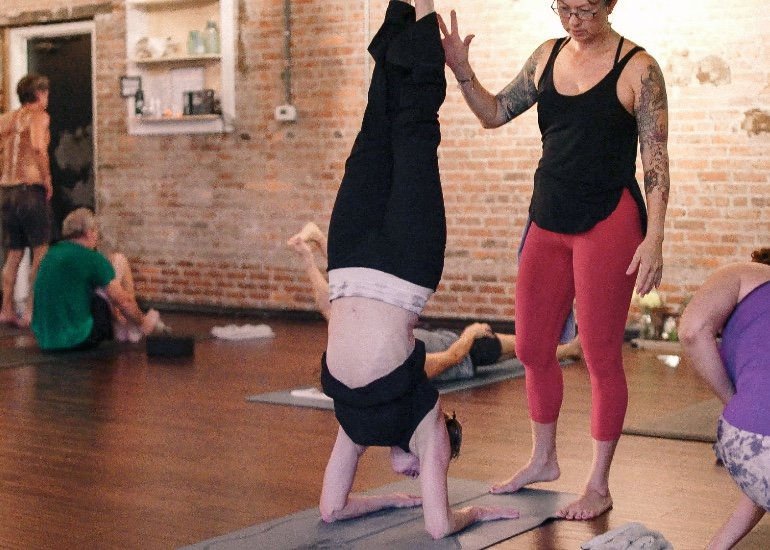
Practice is not something we accomplish. It is something we return to. Again and again, over days, months, and years. Continuity gives us the opportunity to observe. Observation gives rise to discernment. Discernment shapes progression. And progression, approached with patience and wisdom, becomes a practice that can sustain us for a lifetime.
How we listen becomes the way we move through the world — with ourselves, with our families and communities, and with the world around us, both near and far.
Can you do it on your own? Not because you have to. But because you can. Because the practice is within you—not outside of you. Because you are capable of keeping the fire alive.
When we meet ourselves in this way—with honesty, presence, and a willingness to listen—we begin to understand what we are truly working with. In that understanding, there is space. And in that space, something softens. Something opens.
Holding space isn’t about shaping someone’s journey. It’s about witnessing it with clarity and compassion. It means offering guidance when needed, but never overshadowing the student’s inner teacher.
Practice in and of itself is a form of discipline (tapas). It's effort and work. And with anything that takes as much effort as consistent practice, sometimes the discipline can be or feel binding because of deeply ingrained patterns.
When we practice with consistency and devotion, as Patanjali says is a necessity, we’re able to learn how to control what Patanjali calls the “fluctuations” of our minds. In other words, our yoga practice helps us learn about why we are the way we are. Our practice can help free us from many things: our selves, others, the confines of this world.