Beyond Progress: Building a Practice That Endures
There is a question I return to often:
Will the way I’m practicing today support the way I want to practice tomorrow?
It’s a simple question, yet it has changed the way I approach both practice and teaching.
Many of us begin our yoga journey focused on achievement. We want to become stronger, more flexible, or eventually make our way into a posture we’ve admired for years. There is nothing inherently wrong with having goals. They can provide direction and inspire commitment.
But over time, something begins to shift.
The practice asks us a different question.
Not “What can you do?”
But “How are you doing it?”
That subtle shift changes everything.
Sustainable Practice Isn’t About Doing Less
The word sustainable is often misunderstood.
People hear it and assume it means taking it easy, avoiding challenge, or lowering expectations.
I see it differently.
A sustainable practice can be incredibly demanding.
What makes it sustainable isn’t the absence of challenge—it’s the presence of discernment.
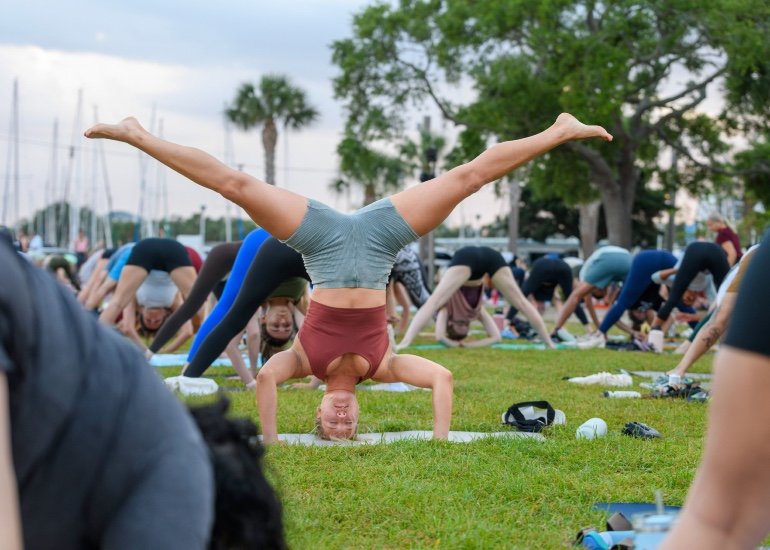
Discernment asks us to recognize the difference between effort and force.
Between challenge and overload.
Between practicing to build something and practicing at the expense of tomorrow.
Every day we wake up in a different body.
The quality of our sleep, our stress, our nutrition, our relationships, the changing seasons, and simply the passage of time all influence how we move and experience practice.
Listening to those changes isn’t a sign of inconsistency.
It’s a sign of maturity.
A sustainable practice isn’t about protecting ourselves from difficulty.
It’s about cultivating the wisdom to know which challenge serves us today.
Progress Is More Than Complexity
We often mistake progression for accumulation.
More difficult poses.
More advanced transitions.
Longer sequences.
More impressive demonstrations.
Yet some of the greatest progress I’ve witnessed has very little to do with complexity.
It looks like someone breathing more freely in a familiar posture.
It looks like less unnecessary effort.
It looks like recognizing when to pause instead of pushing through.
It looks like noticing something today that wasn’t visible six months ago.
The posture may appear exactly the same.
The practitioner is not.
Real progression is rarely loud.
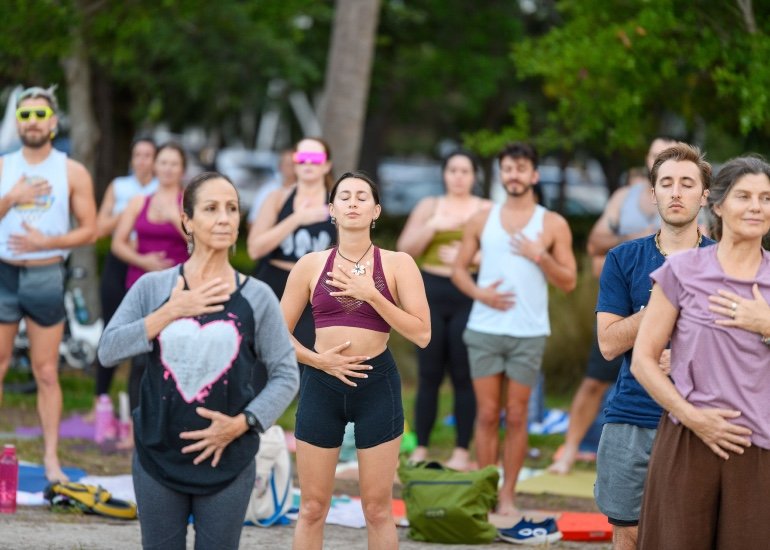
It is found in refinement.
Each time we return to a familiar pose, we’re given another opportunity to observe more clearly.
To notice our habits.
To recognize our compensations.
To experience subtle shifts that would have been impossible to perceive without repetition.
Progress isn’t always about changing the posture.
Sometimes it’s about allowing the posture to change us.
Continuity Creates Understanding
None of this happens without continuity.
One practice teaches us very little.
Many practices begin to reveal patterns.
Over time, those patterns become insight.
Continuity allows us to compare today’s experience with yesterday’s—not from a place of judgment, but from a place of curiosity.
We begin to recognize what supports us.
What drains us.
What consistently helps us find steadiness.
What repeatedly pulls us away from it.
This is where practice becomes less about collecting experiences and more about cultivating wisdom.
Not because every practice feels extraordinary.
But because every practice contributes something to the relationship.
Teaching for the Long Game
As teachers, this changes the questions we ask.
Instead of asking,
“What can I teach today?”
We begin asking,
“How will today’s class influence this student’s practice six months from now?”
That perspective shifts our priorities.
Sometimes the most skillful choice isn’t introducing another variation.
It isn’t encouraging a student to go deeper.
It isn’t offering another adjustment.
Sometimes the greatest teaching is restraint.
Sometimes the greatest gift we can offer is helping students develop the confidence to observe themselves.
Because the goal of teaching isn’t to create dependence.
It’s to cultivate discernment.
The most meaningful compliment a teacher can receive isn’t, “You gave me the hardest class.”
It’s knowing that a student walks into any practice—whether you’re there or not—and asks,
“What does my body, breath, and mind need today?”
That is a practice that can continue long after the class has ended.
The Long Game
Whether we’re students or teachers, sustainability, progression, and continuity are not separate ideas.
They rely on one another.
A sustainable practice allows us to keep showing up.
Showing up consistently creates continuity.
Continuity gives us the opportunity to observe.
Observation develops discernment.
And discernment shapes meaningful progression.
Perhaps real progress isn’t measured by the complexity of the posture.
Perhaps it’s measured by the quality of the relationship we’re cultivating with our practice—and with ourselves.
Because in the end, practice is not something we accomplish.
It is something we return to.
Again and again.
Over days.
Over months.
Over years.
And maybe that’s the greatest lesson yoga has to offer.
Not how far we can go…
But how wisely we choose to continue.
With Love,
Jade
These ideas form the foundation of Module 3: Continuity, Progression & Sustainable Practice, where we’ll explore how observation over time shapes both personal practice and skillful teaching.
Whether you’re a teacher looking to refine your approach or a dedicated practitioner seeking a deeper understanding of how practice evolves, this immersion is an invitation to slow down, observe more clearly, and cultivate a practice that can continue serving you for years to come.