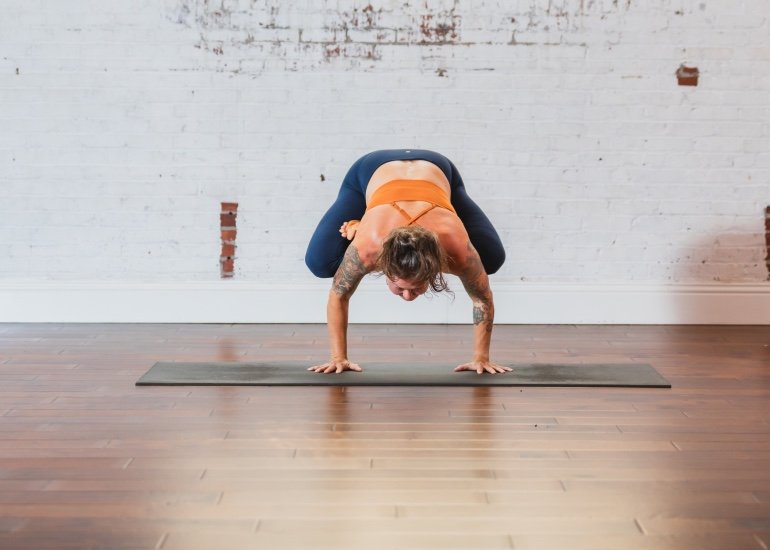
Practice or Performance?
There is a difference between practicing and performing.
At first glance they can look similar. Both involve movement. Both involve effort. Both can produce impressive results. But beneath the surface, they are very different experiences.
When we practice asana, we are developing a relationship.
And a relationship is simply two things coming together.
You and the posture.
You and your breath.
You and your awareness.
Within every relationship there are lessons. Some lessons are easy to receive. Others arrive through discomfort, resistance, frustration, or challenge. Yet each one offers an opportunity to learn what is skillful action and what is not.
This is where awareness begins to develop.
Not through force.
Not through achievement.
But through listening.
Listening not only to words or instructions, but to sensation.
To thought.
To breath.
To the subtle responses arising within the body.
A practice rooted in relationship asks different questions than a practice rooted in performance.
Performance asks:
- How does it look?
- How deep can I go?
- Am I doing it right?
- Am I progressing fast enough?
Practice asks:
- What am I experiencing?
- What am I learning?
- What is this posture revealing?
- How am I responding to what is happening right now?
Performance has its place.
It can inspire us. It can motivate us. It can remind us of what is possible.
But if performance becomes the entire purpose of practice, we begin to lose the relationship.
The posture becomes something to conquer rather than something to understand.
The breath becomes secondary.
Awareness fades into the background.
And the experience narrows.
So the question becomes:
How much of your practice is performance, and how much of it is actually practice?
Because when you are truly in relationship with an asana, you are not simply trying to create a shape.
You are learning how to be within that shape.
You are learning when to engage and when to soften.
When to stay and when to back away.
When to challenge yourself and when to listen more carefully.
And from that place, something deeper begins to unfold.
The constant dialogue of shoulds, coulds, expectations, and comparisons starts to quiet.
What remains is direct experience.
Just this breath.
Just this moment.
Just this posture as it is today.
Now, precision certainly has a role.
Focused attention, or drishti, can help bring us into the posture. It can sharpen awareness and reduce distraction.
But precision without awareness can become fixation.
And when we become overly focused on one aspect of the posture, we often lose sight of the larger conversation that is happening.
The body lets us know when this occurs.
We experience frustration.
Boredom.
Distraction.
Impatience.
Many people interpret these moments as failure.
I see them differently.
They are feedback.
They are information.
They are invitations to pay attention.
The practice is not breaking down.
The practice is speaking.
And when we feel ourselves drifting away from the relationship, there is always a path back.
The breath.
The breath will always tell you where you are.
It will reveal tension before your mind notices it.
It will reveal effort before the body begins to resist.
It will reveal distraction before your thoughts carry you too far away.
And perhaps most importantly, it will always show you how to return.
Again and again.
Not to perfection.
Not to performance.
But to practice.
To relationship.
To presence.
The next time you step onto your mat, notice what is guiding the experience. Are you trying to achieve something, prove something, or perform something? Or are you willing to enter into a conversation with the practice itself?
The answer may change from day to day.
That’s okay.
The relationship is still there, waiting for you to listen.
With steadiness and curiosity,
Jade
P.S. If you’ve been curious about the 300-hour path but unsure where to begin, this is a great place to begin. Module 3 begins soon, and a few spaces are still available!
If you’d like to learn more, send me email or reach out for a conversation.